The Manimani Lineage
From Rhodana to Ngcobo.
The Manimani branch left Lady Frere, from the Rhodana area, and pitched their tents in Ngcobo, Maqwathini. The eldest recorded son is Nkosikho Manimani:
Nkosikho
son of Sinduwamba
son of Sipenisi
son of Poto
son of Manimani
son of Phonye
son of Dolo
The Ngcobo branch still needs the opportunity and knowledge of the house that Manimani left from Lady Frere. That connection is what this portal is for.
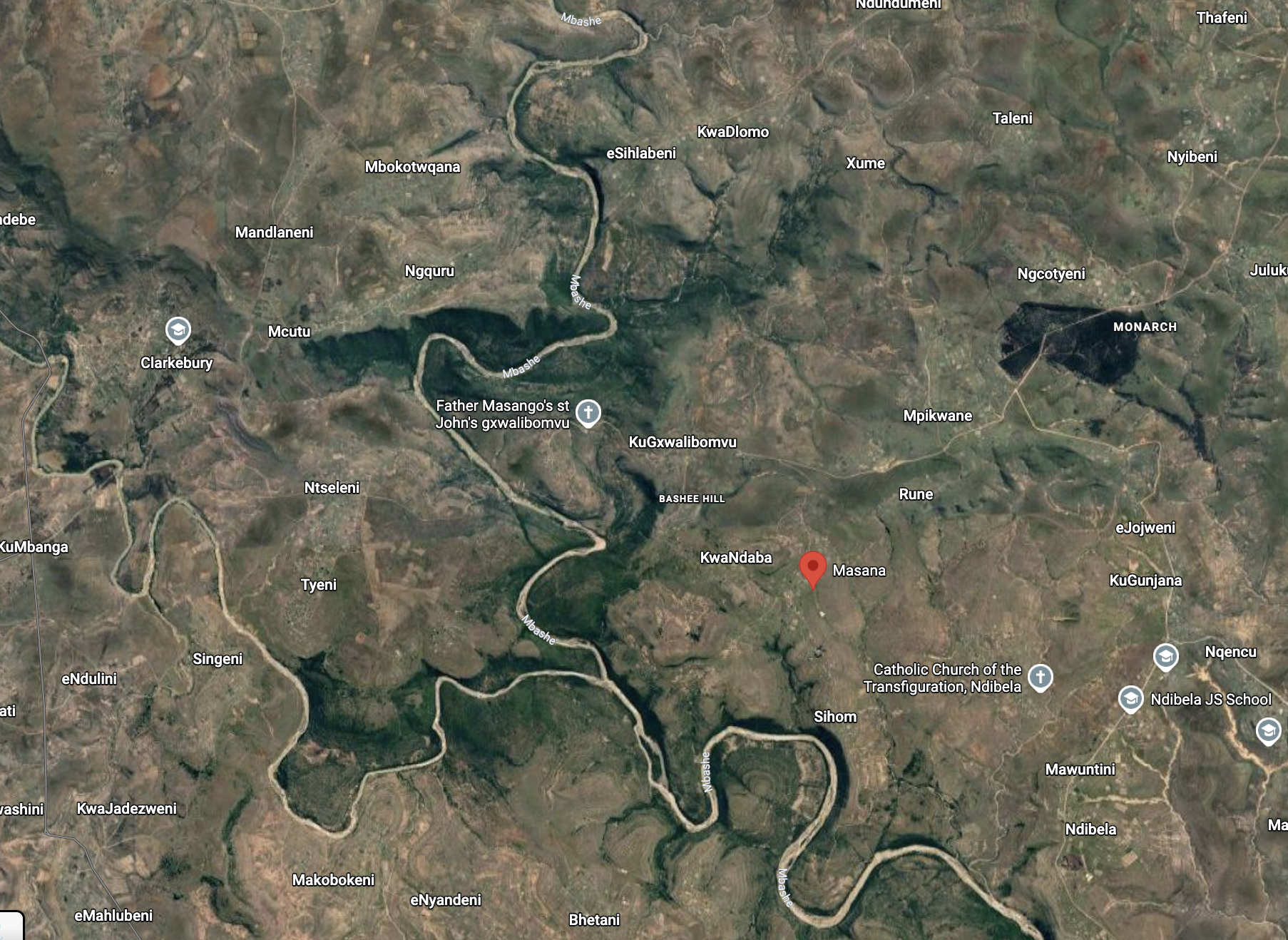
The Ngcobo basin — terrain the Ngcongolo line settled after crossing from Quthing post-1879.
The Ngcongolo Oral Account
The oral history records: at sunset, many people came to Qiti. The first Qiti person to arrive was Ngcongolo and his brother Mafilika. They arrived and stood on the red wall on top of the white hill where the scythes are buried.
They were removed by the scythes when being chased by the whites in the land of the Gwatyu, and crossed over to Qiti land. History says they came from Cofimvaba in the Shobeni. Their capital was being sought. They brought Khethelo and his brother Usdlwengu with them.
Tsula is the father of Ngcongolo and Mafilika. The eldest son of Khethelo was Mbukushe — and that is where the village of Mbukushe was established. He fathered four sons: Zalikho, Galada, Sinoko, and Libaziso.
Regional Distribution
Where the AmaQithi are.
Lady Frere & Rhodana
The founding axis. Rhodana is where Qithi place-memory and Thembu political geography meet. Our current reading says Qwabi Joka (1842-1915) carried San memory from the wider Quthing frontier world into this Lady Frere line.
Villages
Qithi Village (Location 17/18) · Mkapusi · Agnes · Esikhwanqeni · Lower Seplan · Qugqwaru · Bholoto · Tsembeyi · Hala 2 · Ngcuka
Surnames
Ngcobo
The Manimani branch left Lady Frere from the Rhodana area and settled in Ngcobo, Maqwathini. Nkosikho Manimani is also Qithi — son of Sinduwamba, son of Sipenisi, son of Poto, son of Manimani, son of Phonye, son of Dolo.
Villages
Gubenxa Lucwecwe · Lahlangubo · eMadladleni · Gqutyini · Zadungeni · Qumanco · Maqwathini
Surnames
Cofimvaba
Ngcongolo and his brother Mafilika came from Cofimvaba in the Shobeni. They arrived at Qiti first — standing on the red wall on top of the white hill where the scythes are buried. They brought Khethelo and Usdlwengu with them.
Villages
Shobeni
Surnames
Engcobo / Cala Region
Additional Qithi families across the Engcobo and Cala region. The Khethelo line is traced through Mbukushe, eldest son of Khethelo, who fathered Zalikho, Galada, Sinoko, and Libaziso.
Villages
Engcobo district
Surnames
Free State
Qithi families in the Free State come from Mcambalala in Luxeni, Lady Frere. The Silimela line traces through Mnqayi (also Daloni) → Thiyekile → Teyimani. Nkqwiliso left his bride to look for work and never returned — but left children in the place where he was.
Villages
Mcambalala in Luxeni, Lady Frere (origin)
Surnames
On the Map
From the mountain to the village — the route is visible.
Mkapusi, Lady Frere — the Qwabi home village

Mkapusi, Lady Frere — home of Qwabi Joka (d. 1915). Note “Mqithi” labelled on the satellite image. This is where the Qwabi line settled after the 1879 war.
The migration — Quthing to Mkapusi (700km)

The route from Quthing (Mount Moorosi) to Mkapusi — approximately 700km south. Our family history says this is the road Qwabi's people used after the fall of the mountain in 1879.
Wall of Remembrance
Those who carried the community.
AmaQithi members whose community work has gone unseen. Named here so they are not forgotten.
Access Notice
Full family records, genealogy data, and the skills directory are available to registered members. If you are AmaQithi and not yet registered, your application is just below.
Is your family on this list?
If yes — apply for membership and join them. If no — apply and tell us what we are missing. Either way, start here.